BIOGRAPHICAL REFLECTION
THREE: Drawing with sidewalk chalk on my driveway with my best friend. We would draw all sorts of things, starting with basic lettering like our names, ranging all the way up to full bodied figures we thought up.
EIGHT: Started figure skating, which would become my passion for the next ten years. Won the gold medal on the Lake Placid Olympic skating rink and competed in many other shows and competitive events.
FOURTEEN: Really truly discovered my love for art through many high school art classes, such as drawing, painting, graphic design, photography, etc.
EIGHTEEN: Went away to Burlington, VT to Champlain College, where I would spend the next 3.5 years until I graduated. I chose my major as Graphic Design and Digital Media and had the dream of working in print design for a fashion magazine.
NINETEEN: Got my first internship after my freshman year and moved to New York, New York to spend the summer interning in fashion at V Magazine. Discovered that I, in fact, did not want to work in the fashion industry.
TWENTY: Studied abroad in Montreal, Quebec for a semester and interned as a graphic designer at a film company called EyeSteelFilm. Created my first film poster on my first day of my internship.
TWENTY ONE: Created my Capstone Project at Champlain College- a series of zines, animations, and puzzles surrounding the theme of objectivity of women and men in the media and through social norms in a variety of categories. I cut many different body parts out of magazines to represent objectivity in the media, and these zines would be my first collages.
TWENTY FIVE: I had moved back home and was offered a job as a photography teacher for an adult continuing education program at my prior high school. I had never thought about being a teacher, but what did I have to lose? I nearly had a panic attack teaching my first photography class, but by the end, I realized I loved to teach—to pass along my knowledge!
TWENTY SIX: I went through some hardships in my life, and I started attending an art therapy group every Friday night. This is when I started making collages to process things I’d been through. I also started documenting my life through the film camera my grandfather willed to me, which is still the camera I use today. I participated in my first art show since college, which would be the start of participating in many more local art shows from that point on.
TWENTY SEVEN: Having come to realize that I loved to teach, I applied for and got a job teaching art to children aged K-12 at a local Boys and Girls Club. I absolutely fell in love with teaching art to children, and I applied to go to graduate school to pursue this as my career. I spent the next four years as an Art Specialist at the Boys and Girls Club, and there was nothing that brought me greater joy than teaching my students how to express themselves through art.
TEACHING TECHNIQUES AND PHILOSOPHICAL PERSPECTIVES
The teaching technique that best aligns with my past teaching methods as well as my future teaching goals is the Education of Artistry philosophy. This teaching technique aligns quite perfectly with what I believe is most important in the field of art education. The key idea behind the Education of Artistry philosophy is process over product. This means that the process of artmaking is more important than the finished result of said artmaking. The converse philosophy to Education of Artistry is the Education of Arts philosophy, where the final product is considered the most important over the process. In Education of Artistry, it is not that skill and technique in artmaking are not important, because they are! However, this theory encourages students to question the process and work flexibly while finding their way to their end results.
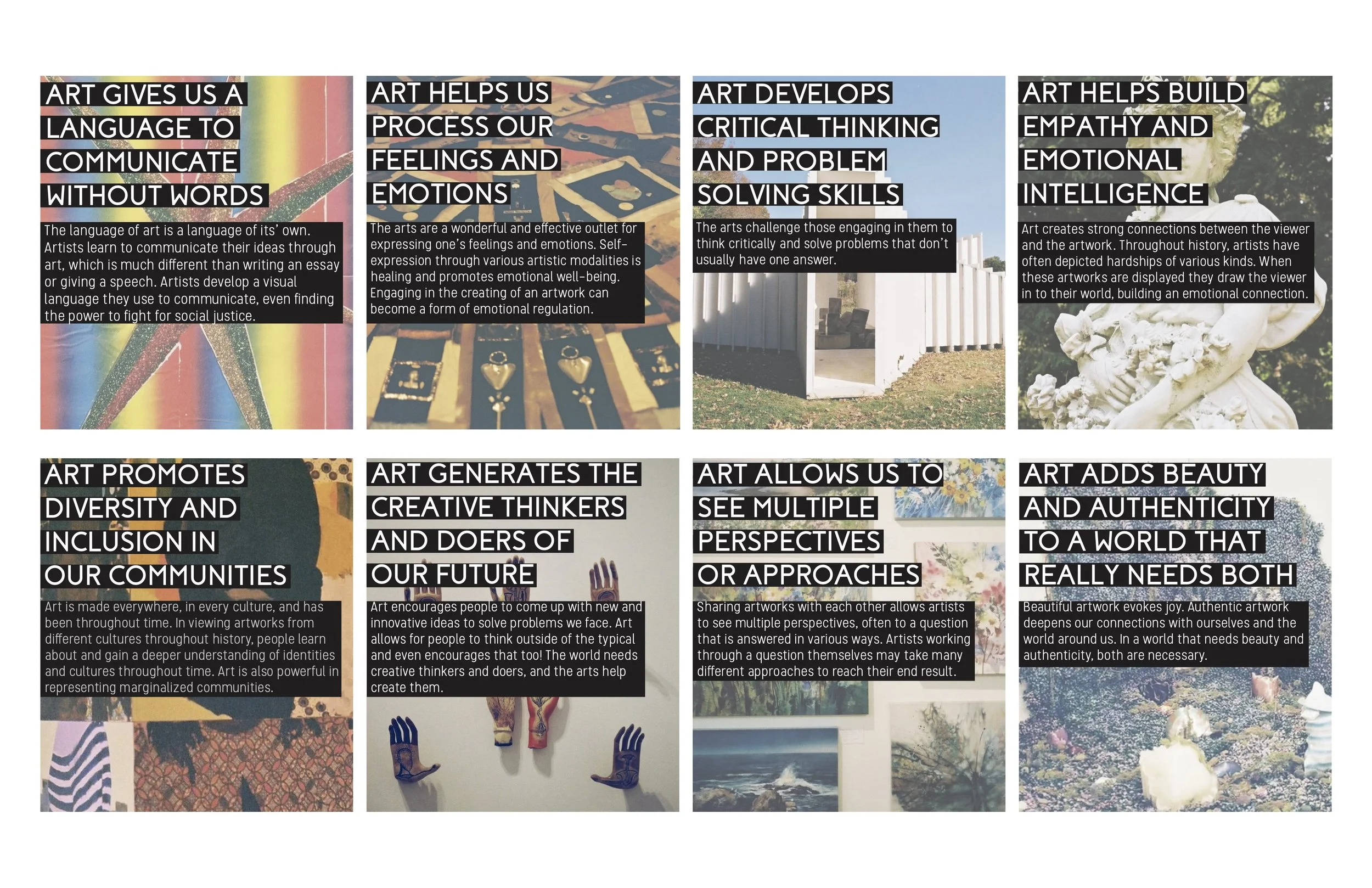
Another key aspect of the Education of Artistry philosophy is that it holds the belief that students use artmaking as a means of storytelling throughout their process. Process over product mentality encourages multiple approaches to problem solving. The Education of Artistry philosophy holds a firm belief that meaningful art education should develop students’ voices, skills, and purpose. This theory also supports the belief that exemplary art education allows students to communicate through their artworks rather than words, and, in many cases, in ways that words cannot communicate.
In my prior teaching in the arts, my teaching style put an emphasis on Education of Artistry philosophy. At a certain age, I noticed students would tend to become frustrated with their artmaking because they weren’t happy enough with the end results. I would always encourage students to think about the process rather than the final product. I would tell them that the process is the most important part, and try to get them to think about what they learned from their journey to the final product. I believe that skills matter, but art is not just about skills. Art is about developing that voice to communicate, and that voice cannot always be communicated through words; that’s part of why art is so powerful. It is about expressing one’s emotions through the medium one is working with. Plus, art is so subjective after all. What’s important to me in my classroom, past and future, is that students are developing not only a skillset in the arts, but also learning to express themselves through the arts and tell the stories they need to tell. I think that if a student is able to achieve those things through their artwork, then the final product is deemed to be successful.
One potential challenge I could see to teaching using the Education of Artistry philosophy is that students may not master a skillset in the arts. I absolutely believe that the journey is more important than the destination, and, in art, the process is more important than the product. However, a fundamental skillset across the art mediums must be obtained by students in their art classrooms as well. This will aid students in effectively communicating through the arts. As an educator, I would not want that to be forgotten.
This exploration has helped me think about my teaching style and why it is important to me. It has also allowed me to be able to explain and put a name on the theory that aligns best with my teaching style, the Education of Artistry philosophy. I believe that, despite one potential challenge I could find with this theory, the benefits of implementing process over product artmaking in art education far outweigh any negatives.
Works Cited:
Harris, T. (2023, July 18). Arts philosophy in practice. The Institute for Arts Integration
and STEAM. https://artsintegration.com/2016/11/21/arts-philosophy-practice/